
What is the true value of a donation?
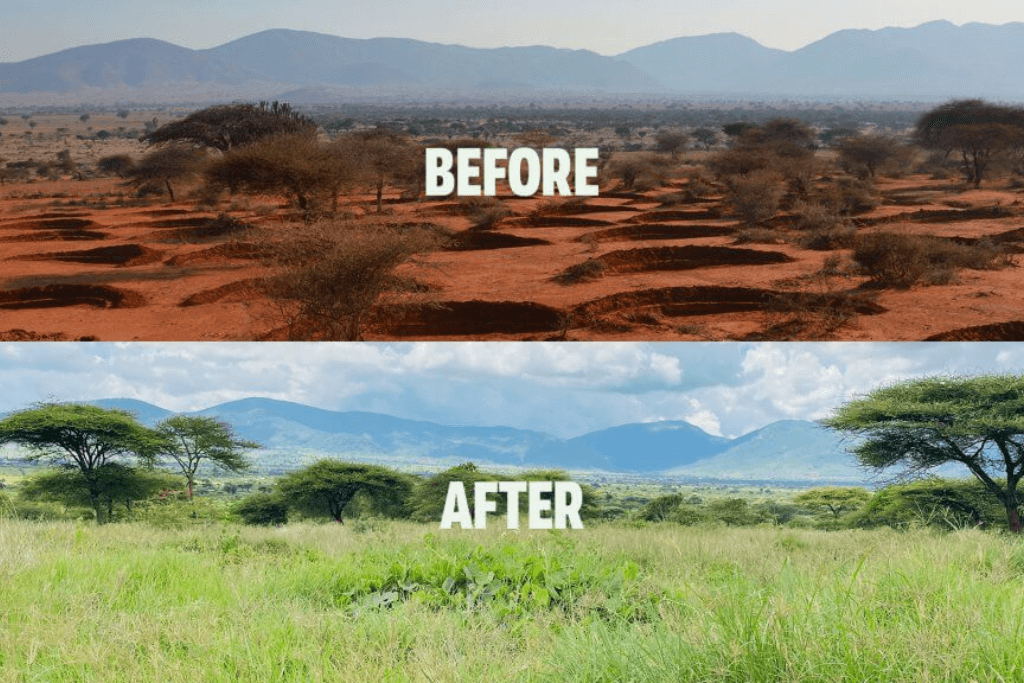
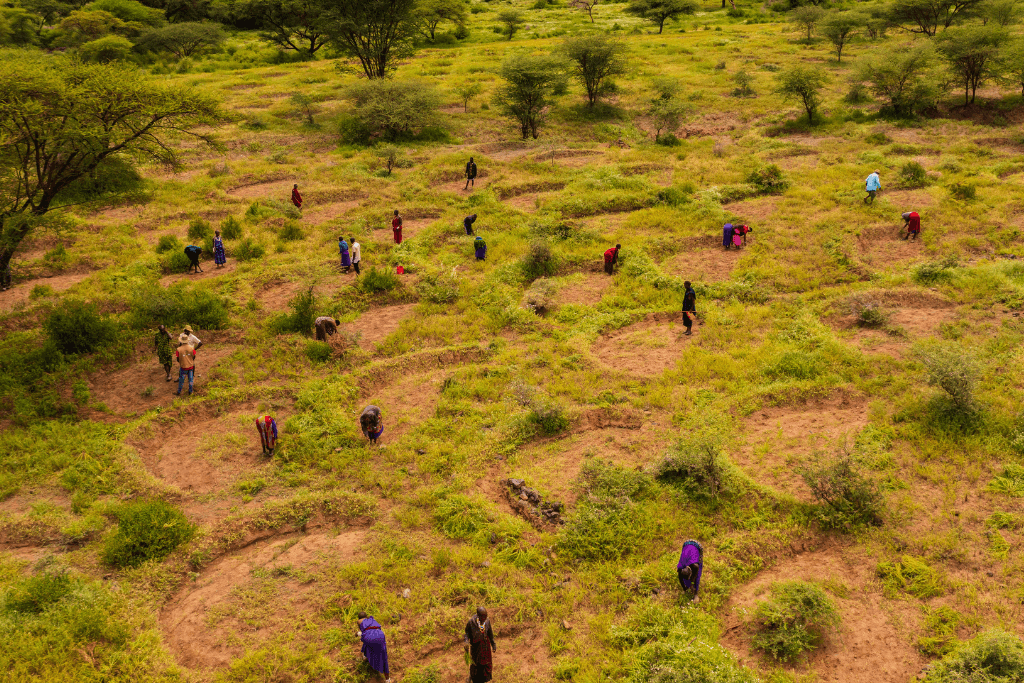
When you support nature restoration, what are you really investing in? For a long time, the answer has often come down to a single number: tonnes of CO₂. But regreening does far more than capture carbon: it restores soil, strengthens food security and creates income for farming communities. Until now, that fuller picture has been difficult to quantify in a single, comparable figure. Together with Impact Institute, we set out to change that.
Introducing the True Return on Donation (TROD)
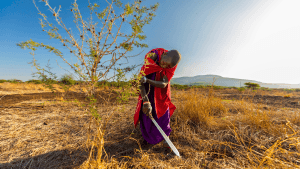
Impact Institute independently applied their True Return on Investment (TROI) methodology to Justdiggit’s Farmer Managed Natural Regeneration (FMNR) programme in Tanzania, resulting in a True Return on Donation (TROD) for the programme.
The method translates the full range of environmental and social benefits generated by regreening into a single monetary value, based on a 20-year outlook and internationally recognised ecosystem service classifications.
The results show that every €1 donated generates €46 in societal value*: €34 in global climate value and €12 in local economic value for the farming communities involved in the programme.
*This figure represents a conservative estimate. Several ecosystem services generated by FMNR, including water-related benefits such as runoff regulation, water erosion control and flood protection, are not yet included and will be added to the model as more evidence from our programmes becomes available.
Where does the value come from?
This value is driven by several benefits working together:
– Carbon sequestration: capturing and storing CO₂ as trees and vegetation regrow
– Improved crop yields: through enhanced soil fertility and water retention
– Provision of food, firewood and animal feed: direct benefits for household resilience
A fuller measure of impact
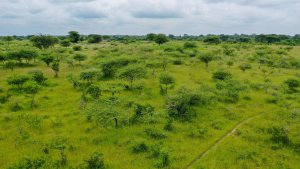
By bringing these benefits together into one comparable metric, TROD allows Justdiggit and our partners to talk about impact differently: not just in terms of carbon, but in terms of the full value that regreening creates for people and planet together.
For donors, partners and organisations exploring nature-based solutions, this means a clearer, more complete way to understand the return on an investment in nature and a stronger basis for deciding where that investment can do the most good.
What’s next?
We see this as a foundation rather than a finished picture. As we gather more data across our FMNR programmes, we might apply and refine this approach further, including incorporating additional ecosystem services as evidence grows.
Read the full results in our 2025 Impact Report, and read Impact Institute’s perspective on the collaboration on LinkedIn.